Unlocking the power of cellular saliva to detect brain injury at the point of care.
For years, the challenge in saliva diagnostics has been the low and highly variable biomarker concentration in the saliva fluid.
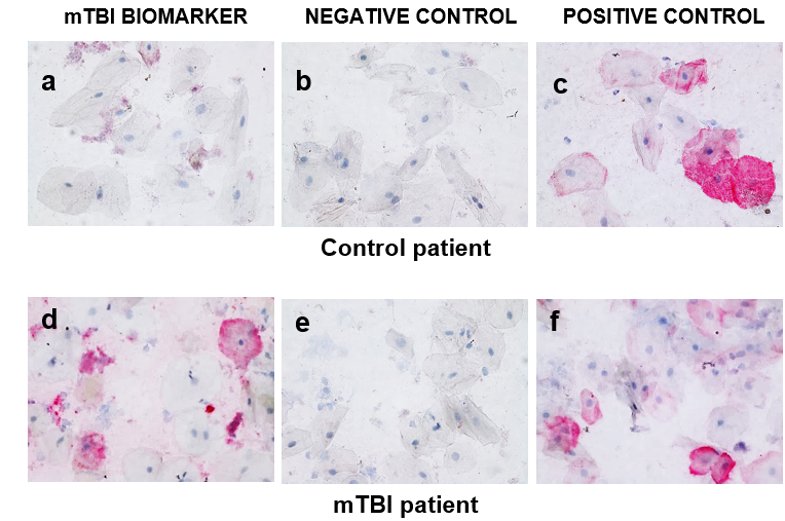
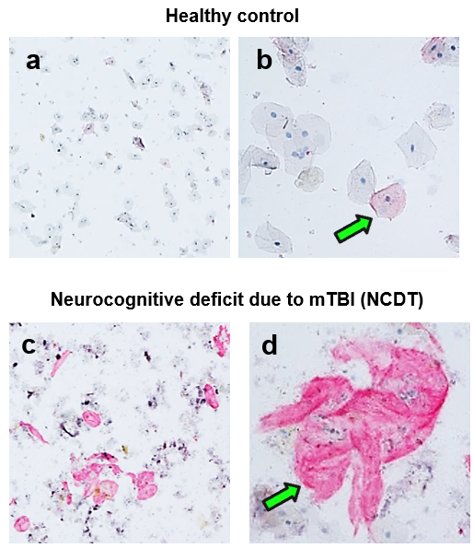
We have fundamentally changed saliva diagnostics by showing that Saliva contains live cells expressing disease biomarkers.
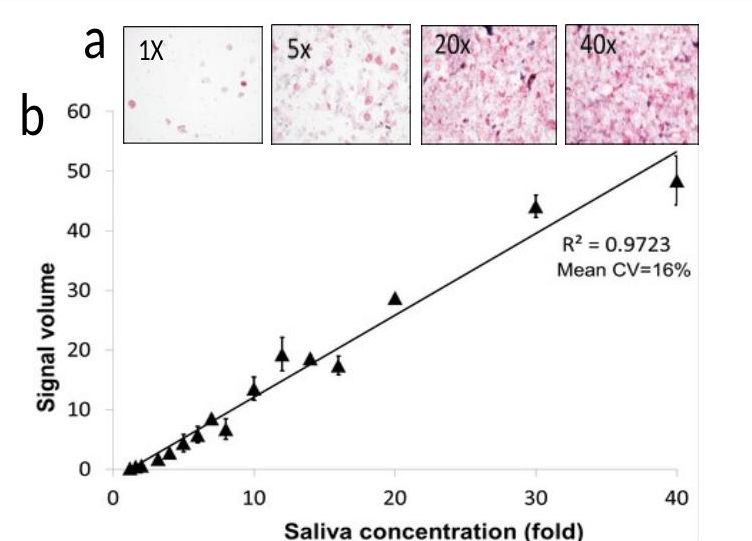
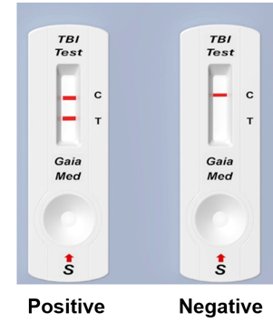
Our patented saliva assay measures cellular and fluid biomarkers, yielding >100 times higher and 7-fold less variable biomarker concentration than the standard fluid assays. This breakthrough allows BrainGuardian™ to detect the saliva-based TBI biomarker using a rapid lateral flow test — no laboratory equipment required.
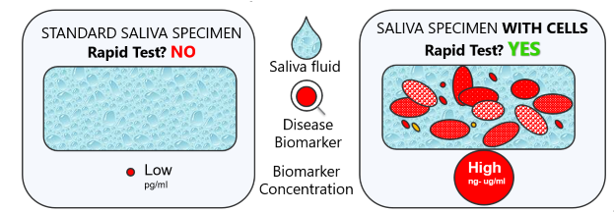
Standard saliva fluid yields low biomarker concentration (pg/ml). Cellular saliva yields high concentration (ng–μg/ml), enabling a rapid visual test.
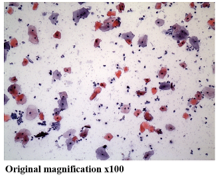
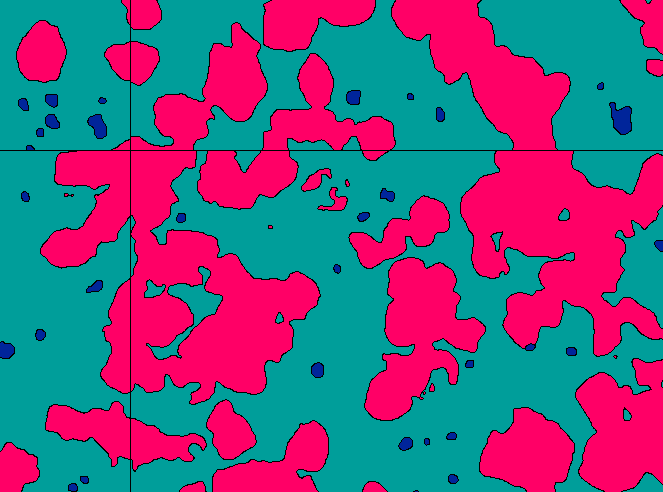
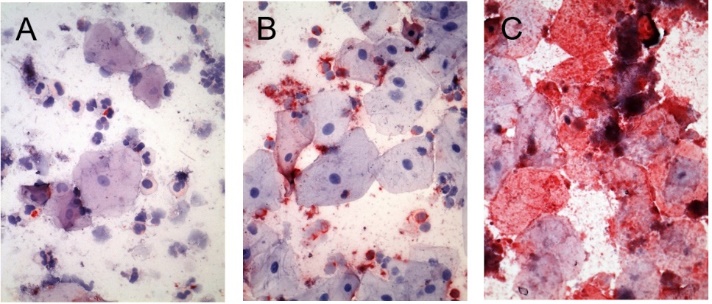
Original magnification ×100
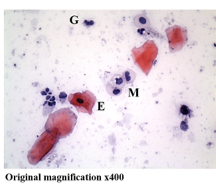
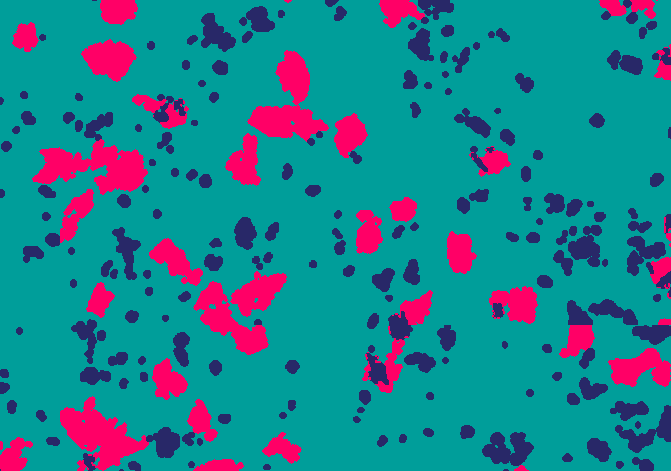
Original magnification ×400
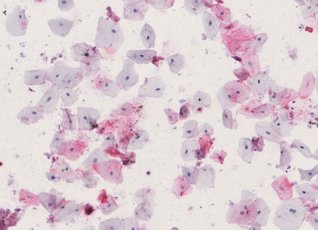
Cellular composition of human saliva. Hematoxylin & Eosin stain. Adult human saliva contains approximately 2 million cells/ml comprising epithelial cells (E), granulocytes (G), monocytes (M) and lymphocytes.
S. Southern, J Hum Virol. (1998) 1(5):328-37. Milk-borne transmission of HIV. Characterization of productively infected cells in breast milk and interactions between milk and saliva.
Southern, S. et al. (2002). Cellular Mechanism for Milk-Borne Transmission of HIV and HTLV. In: Advances in Experimental Medicine and Biology, vol 503. Springer, Boston, MA. https://doi.org/10.1007/978-1-4615-0559-4_21

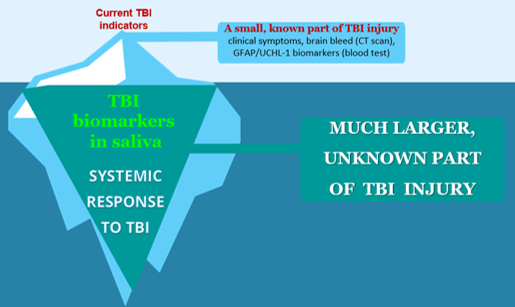
The traditional way to identify a disease biomarker has been to measure of the components of the injured tissue leaking into blood and other body fluids (e.g., troponin after heart attack or GFAP/UCHL-1 after TBI).
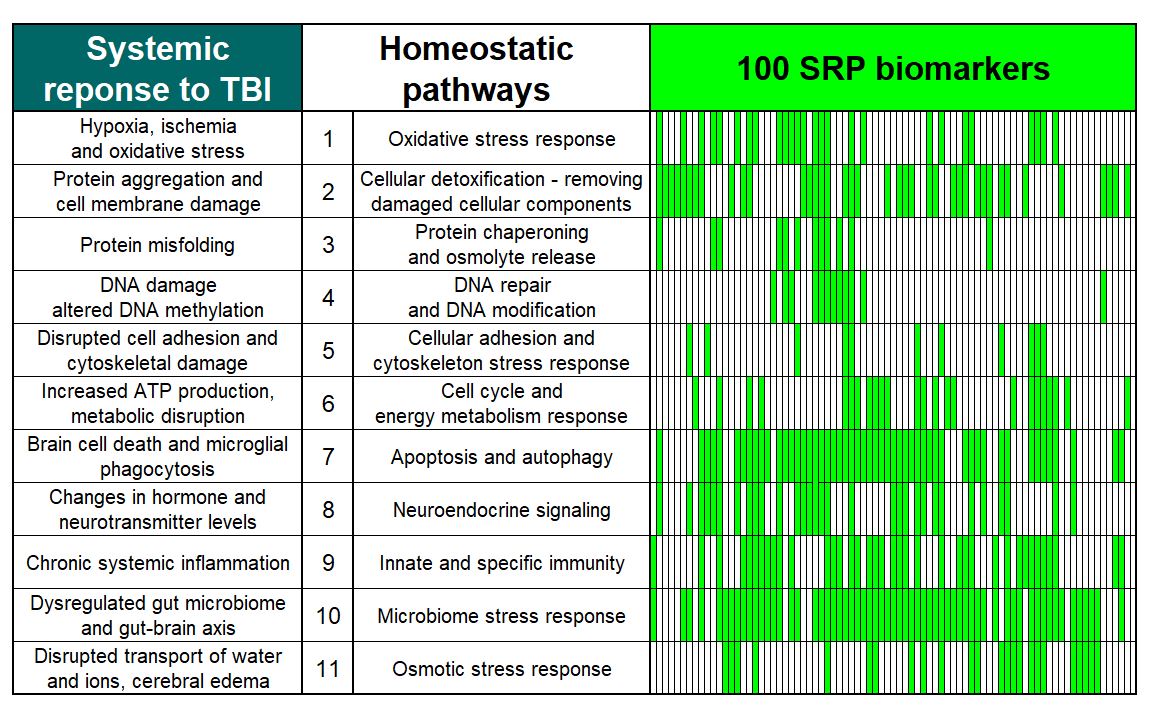
We used our new method STRESS RESPONSE PROFILING (SRP) (US Patent 8,518,649) for a large-scale data mining of systemic response to TBI to objectively discover new TBI biomarkers in saliva.
Stress Response Profiling (SRP). SRP measures systemic biological response to TBI via array of 100 surrogate biomarkers that monitor activation of principal homeostatic pathways with known links to cellular and molecular responses to TBI. The SRP method for biomarker discovery has been successfully applied to other diseases such as dementia, showing that it is innovative in a broad sense.
Sarka O. Southern, W. Frank Peacock, and Ava M. Puccio. "Saliva biomarkers of traumatic brain injury." Biomarkers for Traumatic Brain Injury. Academic Press, 2020. pp. 333-353.
Blood tests and CT scan are positive only in TBI with brain bleed.
BrainGuardian provides a solution for the “Silent Majority” with undiagnosed TBI. It is the one-stop solution for the entire TBI spectrum, from sport concussions to TBI with or without a brain bleed.
Blood tests can detect TBI biomarkers for up to 24 hours after injury.
BrainGuardian detects saliva biomarker of TBI from 1 hour up to 9 days after injury — critical for patients with delayed-onset symptoms.
Point-of-Care ready for
Any Environment
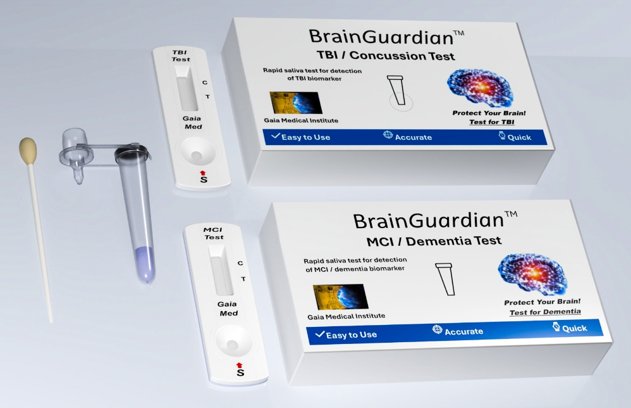
BrainGuardian uses a simple, non-invasive saliva swab for a rapid "Yes/No" answer on the sideline, in the clinic, at home or on the battlefield—no needles or specialized imaging required. No medical training required. Safe for children.
9 issued US and international patents: Synergistic Ecosystem of 3 functional clusters.
Cluster A: Continuous Discovery Engine (Platform IP).
Cluster B: Diagnostic Mechanics (Method IP).
Cluster C: Clinical Products (Application IP) specific revenue streams —saliva tests for TBI and dementia.
Others require a lab, a blood draw, and equipment. We just need a saliva swab.
| Feature | BrainGuardian™ | Abbott i-STAT | GE CT Scan |
|---|---|---|---|
| Detects sport concussion | Yes | Not indicated | Not indicated |
| Diagnostic window | 1 hour to 9 days | 12–24 hours | 1–24 hours |
| Sample type | Saliva (noninvasive) | Blood draw | None (radiation) |
| Time to result | 15 minutes | 15–60 min | 30–60 min |
| Cost | $30–$50 | $309+ | $300–$4,800 |
| Safe for children | Yes | Not indicated | Radiation concerns |
| Point-of-care setting | Professional & consumer | Professional only | Hospital only |
Three independent NIH-funded studies at leading U.S. academic centers have validated our saliva TBI biomarker.
N=1,059 men and women age 8–70 (mTBI and controls) were enrolled in sport concussion clinics and Emergency Departments at the University of Pittsburgh UPMC; Children’s Hospital of Philadelphia (CHOP), University of Pennsylvania, Ben Taub Hospital and Texas Children’s Hospital, Baylor College of Medicine in Houston, University of California San Diego, and University of Arkansas.
TBI cases included sport concussion, fall, motor vehicle crash, and assault. Controls included mild traumatic orthopedic injury (broken bones, no head injury), uninjured ER patients, healthy non-athletes and athletes (uninjured players and preseason athletes) — providing strong specificity data for the FDA.
Our clinical pathways are guided by Key Opinion Leaders who set the standard of care for concussion in the U.S.
Meet the Team